
List of Histories
February 2008: Meeting "M" (Montreux/Switzerland)
November 1996: Women, drugs and Taliban in Kabul (Afghanistan)
March 1995: Lunch with the Taliban (Helmand/Afghanistan)
August 1994: Landmines and the "clash of civilizations" (Kandahar/Afghanistan)
February 1994: A dinner in Tehran (Iran)
Histories
February 2008: Meeting "M" (Montreux/Switzerland)
In February 2008, I was invited to speak about cybercrime at a “customer summit” held by McAfee Anti-virus in Montreux, Switzerland. Heading the Economic Crime Division of the Council of Europe, we had previously started cooperating with Microsoft in countering cybercrime. I accepted the invitation to further broaden engagement with and possibly funding from the private sector.
And indeed, following my discussions in Montreux with the then chief executive of McAfee, Dave DeWalt, that company launched a cybercrime initiative in October 2008, the Council of Europe subsequently received a financial contribution for capacity building activities and I became a “cybercrime fighter of the year”.
But back to Montreux: The summit was held at a medieval fortress, the Château de Chillon at the shores of Lake Geneva and was preceded by a dinner in this romantic castle.
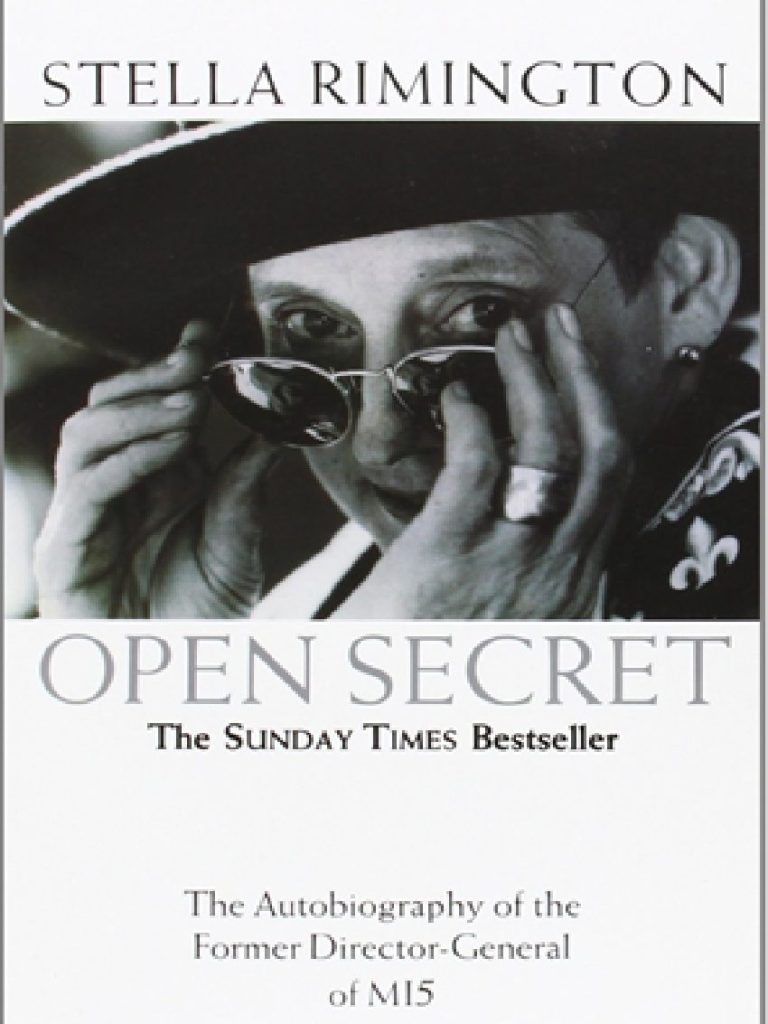
As I joined for dinner, the organisers were somewhat nervous because they had just learned that their VIP guest had arrived in Montreux earlier than expected. They were wondering where to place and how to entertain her during dinner given that the McAfee leadership was not yet around. I volunteered to be her table neighbour. And this is how I spent an evening with “M”: Dame Stella Rimington.
Until the early 1990s, the identities of the heads of UK’s MI5 and MI6 were kept secret. When in July 1993 the name of the MI5 Director-General was made public, to general surprise, it happened to be a woman, namely, Stella Rimington. This, later on, encouraged the producers of the James-Bond-movies to modernise their characters, and in 1995, Judi Dench took over the role of “M” in Golden Eye.
A pleasant evening followed with Dame Stella sharing stories on how she got into the MI5, the reaction of the media – and of her neighbours panicking – upon her identity becoming public knowledge, and of her post-retirement career writing detective stories. I got a copy of her autobiography (“Open Secret”).
Actually, the fictional “M” of James-Bond would have been heading the external intelligence service MI6 and not the MI5; and so far, MI6 directors general have all been male. But these are details. The next day, Stella Rimington was still introduced to the meeting to the sound of Tina Turner’s “Golden Eye”.
PS: Dame Stella Rimington passed away on 3 August 2025 at the age of 90.
Histories
November 1996: Women, drugs and Taliban in Kabul (Afghanistan)
On 27 September 1996, the Taliban – a movement that had started in the southern province of Kandahar two years earlier – also captured Kabul, the capital of Afghanistan.
At the time, I was carrying out a project for German Technical Cooperation (GTZ, now GIZ) on “drugs and development in Asia”. The purpose was to prepare proposals on how the international community could support a human development-oriented approach to drug control. With Afghanistan being by far the world’s largest producer of opium, the main ingredient of heroin, figuring out the intentions of whoever was in charge of Afghanistan was highly relevant.
And so in November 1996, a few weeks after the [first] fall of Kabul, I travelled there to assess the situation.
In Peshawar, local GTZ staff linked me up with an NGO (the International Rescue Committee) that was ready to take me along to Kabul on the flatbed of a Toyota Hilux. To my amazement another daring passenger had been one of my professors at the South Asia Institute (SAI) of Heidelberg University 15 years previously: Bernt Glatzer was determined to find out whether anything of the SAI branch in Kabul had survived Russian occupation (1979 – 1989) and the subsequent civil war among Mujaheddin factions.
After crossing the Khyber Pass and entering Afghanistan via the Torkham border we drove towards Jalalabad but then turned north to visit a GIZ carpentry workshop in Kunar province. The Taliban were still fighting Mujaheddin forces in that region, but we were told that travel was safe during daytime. The workshop offering vocational training to young Afghans (men, obviously) was still operating in spite of ongoing fighting in its neighbourhood.
In Kunar, I took a picture of a group of girls that I later on used for the cover of a GTZ publication on “Drugs and Development in Asia” with the annotation “Drug control is about development opportunities for these girls in Afghanistan”.
As we were about to return to Jalalabad, one of the tyres of the Hilux went flat. I studied a herd of camels in the sunset while it was being replaced with the spare tyre. Two hours later, by now it was dark, a second tyre gave up just as we were entering the hotel compound in Jalalabad.
The next morning we continued from Jalalabad to Kabul for about 150 km along what many consider the most dangerous road in the world with its steep gorges, high cliffs, narrow lanes and sharp turns. Spectacular landscapes were décorated by skeletons of Russian tanks. There was hardly any traffic due to the uncertain security situation following the arrival of the Taliban in Kabul. Surprisingly, there was not a single check point even as we entered Kabul.
In Kabul it was cold with occasional snow flakes. And we were strongly advised not to take any photos to avoid trouble with the new rulers.
Our intention had been to stay at a German embassy guest house where the only personnel left was local guard. While waiting for clearance from the new masters of the city we decided to have lunch. The restaurant was rather dark in a damaged one-storey building. It had no windows and candles were the only source of light. Customers were few and all male. The lunch consisted of rice, bread and lots of meat. As a vegetarian I removed the meat and put it on a separate plate.
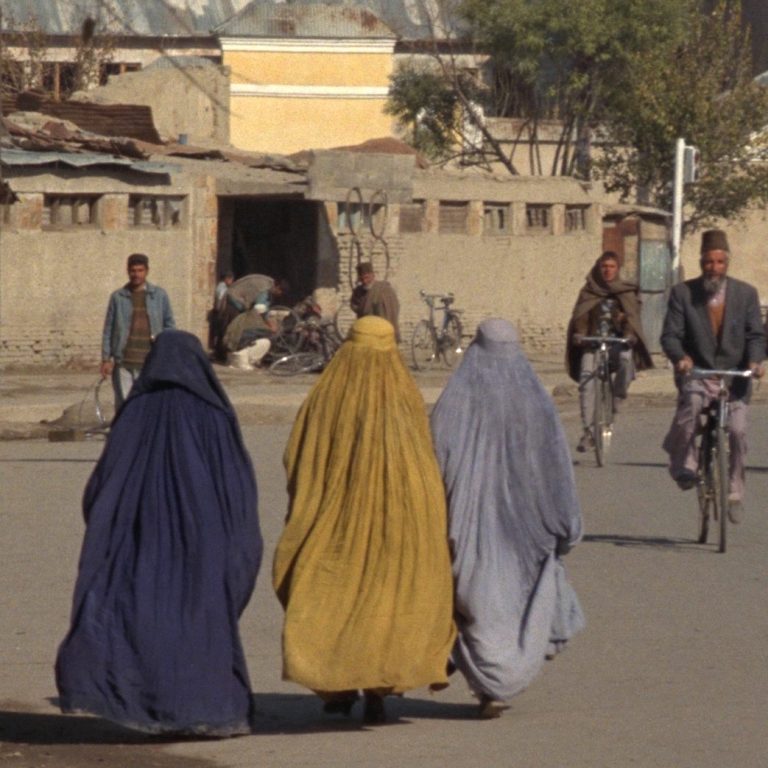
Then a group of three Afghan women entered fully covered in burqas begging for money. The owner of the restaurant wanted to chase them away for fear of the Taliban’s reaction to women mixing with men in his establishment.
We had no local money yet to give them and there were rumours of Taliban cutting off fingers of persons carrying Pakistani rupees.
When I moved my plate with meat closer to the women, the food rapidly disappeared under their clothes – they ate it standing there. They seemed to be close to starving under their burqas. So I asked the manager of the restaurant to send the women to the back of the room where nobody could see them and serve them all the food they wanted.
These women were not the exception. The streets of Kabul were full of women erring around under burqas to find food or money to survive. Those that had jobs before – including in health and education sectors – were not allowed to work and were now without any source of income. Many others were war widows or internally displaced women who had fled to Kabul. With the Taliban now in power also here, their situation had become desperate.
The first night, we stayed in the Hotel Inter-Continental Kabul. Sleep was disrupted by the noise of almost permanent gunfire with Taliban defences shooting at the sky at real or imaginary Mujaheddin planes.
The following day I had a meeting with the Taliban’s “deputy minister of foreign affairs”, a young man in his early thirties who spoke excellent English named Sher Mohammad Abbas Stanikzai. He insisted that Germany should recognize the Taliban government given that Afghanistan’s defeat of the Soviet Union had led to the collapse of the USSR and paved the way for German reunification (an argument I had heard from them before). The Taliban were against opium production, but Afghanistan needed international support to provide alternative sources of income to communities growing opium-poppies. I replied that without the Taliban permitting education for girls and women to work and earn a living, international support would not be forthcoming and alternatives to the narcotics economy would not be feasible.
That night, the Taliban’s “Radio Shariat” broadcasted a summary of my meeting with the deputy minister, but only of what he had told me and nothing of what I had said to him.
The next morning, I went to see the Secretary of the State High Commission for Drug Control that had been established in the early 1990s. I knew him from my previous work at the United Nations, and for now the Taliban kept him in place. Former UN colleagues had asked me to check whether his office had issued a license for the import of a controlled dual-use substance from Poland that served medical purposes but could also be used as a pre-cursor for heroin.
After our friendly chat he asked me whether he could submit a short report of our meeting to Radio Shariat. I agreed under the condition that I could write up the news item myself. And indeed, that night Radio Shariat reported that there was this German guy visiting Kabul saying that narcotics control would not be possible without girl’s education.
With Bernt Glatzer we also visited what was left of Kabul University – mostly ruins – and then walked to the dilapidated zoo of Kabul. One of the few animals left was a lion with a badly mutilated face. Marjan, the lion, was gifted to Kabul Zoo by Germany in 1976. In March 1995, a Mujaheddin soldier went into the lion’s den to demonstrate his bravery but Marjan killed him instantly. In revenge, the brother of the dead soldier then threw a grenade at Marjan, permanently blinding and deafening the lion. But Marjan survived as a celebrity until he died of old age in early 2002.
As we set out to leave Kabul we passed Ariana Square. Someone pointed at the traffic light pole and said that the dead body of former president Najibullah had been hanging there just a few weeks earlier. Mohammad Najibullah Ahmadzai was the Soviet-supported president of Afghanistan from 1987 until his resignation in April 1992 following the takeover of Kabul by the Mujaheddin. He found refuge at the United Nations compound in Kabul and lived there until the Taliban dragged him out and assassinated him and his brother on 27 September 1996. Najibullah’s dead body was then hanged at the pole of the traffic light for public display. A chair used to lift him up was still lying on the ground under the light pole.
At the exit of Kabul we were stopped at a check point. A Taliban officer dressed in white looked first at us and then towards heaven while muttering a litany of something we didn’t understand. Another, more “worldly” officer in ragged uniform, urgently ushered us on before the Talib would develop ideas.
Eventually we made it back to Jalalabad and Peshawar without further incidents
Postscript 1:
Since the Taliban retook power in August 2021, the situation for women and girls in Afghanistan is more dire than ever. Abandoned by the world, it has deteriorated into what UN agencies now call the world's most severe women's rights crisis. Over the five years since, the Taliban have issued more than 100 decrees further restricting the lives and rights of women. Afghanistan is now the only country in the world that formally bars girls and women from education beyond the primary level. Roughly 2.4 million girls remain shut out of secondary school, reversing two decades of progress. Women are largely excluded from paid employment and public life more broadly. The August 2024 "Law on the Propagation of Virtue and Prevention of Vice" formally entrenches restrictions on their dress, speech, and movement. Roughly half of Afghan women report leaving their homes only once or twice a month.
Healthcare has become a particular flashpoint: women can only be treated by female staff, yet the Taliban have also barred women from medical education, threatening to eliminate the female healthcare workforce entirely over time. This has contributed to a mental-health crisis, rising rates of child marriage and gender-based violence, and worsening maternal health.
Decrees no. 12 and 18 of January and May 2026 further eroded the standing of women before the law (the latter setting no minimum marriage age) so that "men and women are no longer equal before the law in Afghanistan" (UN Women).
Despite the risks, Afghan women have continued to protest under slogans like "education, work, freedom," often facing beatings, arbitrary detention, and surveillance in response. The International Criminal Court issued arrest warrants in July 2025 for senior Taliban leaders specifically citing gender persecution as a crime against humanity. This is a notable step, though it hasn't changed conditions on the ground. Humanitarian funding for women-led organisations has also been shrinking sharply in 2025, further straining services for vulnerable Afghans.
Postscript 2:
Sher Mohammad Abbas Stanikzai – the “vice-minister of foreign affairs” whom I met in 1996, remained an influential figure of the Taliban in various functions for almost 30 years, including as political representative from 2001 to 2021. Following the return to power of the Taliban in 2021, he again became deputy minister of foreign affairs until 2025. But after repeatedly calling for the reopening of schools for girls and opportunities for women to work and after criticising the leader of the Taliban for banning girl’s education, he was removed and left the country to avoid arrest.
Postscript 3:
Bernt Glazer passed away in 2009. His passion for and contribution to Afghanistan is well explained in this obituary.
Postscript 4:
In 1994, while I was deputy head of the Regional Office for Southwest Asia of the United Nations International Drug Control Programme (a precursor of the UN Office on Drugs and Crime, UNODC) in Islamabad, we published the first comprehensive survey on opium production in Afghanistan, concluding that Afghanistan produced four times more opium (over 3400 metric tons) than anyone had assumed.
In 2000, the Taliban issued and enforced a ban on opium-poppy cultivation. In 2001, ironically the same year that they were removed from power by a US-led coalition following “9/11”, opium production had therefore collapsed to some 185 mt.
In January 2002, at a conference in Germany, I made a suggestion for a “conditionality policy” for the (re-)construction of Afghanistan. Of course, it never got anywhere. The requirement that “[T]he political, military and development agenda of the international community … be linked up to reinforce – rather than (as happened in the past) counteract – each other” was a killer assumption. While development organisations negotiated conditions with local communities, the C.I.A. reportedly distributed briefcases full of money to buy the loyalty of local leaders.
Between 2002 and 2021, absent a coherent strategy, opium production surged again – poppy diseases affecting output in some years – with a record high of about 9000 mt in 2017. Another failure of the international community in Afghanistan.
In April 2022, less than a year of their return to power, the Taliban again banned poppy cultivation resulting in a decrease to some 300-450 mt per year between 2023 and 2025.
Isn’t it ironic?
[see PDF for full story with pictures and graph]
Histories
March 1995: Lunch with the Taliban (Helmand/Afghanistan)
By Spring 1995, the Taliban had consolidated their hold on Southern Afghanistan. They had made the city of Kandahar their HQ and taken over the province of Helmand in the Southwest. Fighting was still going on further north, in Nimroz province.
At the time, I was the deputy head of the regional office for Southwest Asia of the United Nations International Drug Control Programme (which later on became UNODC) based in Islamabad, Pakistan. A few months earlier we had completed the first UN survey with data showing for the first time the enormous amount of opium produced in Afghanistan. The vast majority of opium-poppies was grown in Helmand and Nangarhar provinces.
Given the Taliban’s opposition to alcohol – they had started to bulldoze beer bottles – we were wondering what they were up to in terms of opium. So in March 1995, I travelled to Helmand to check.
And yes, the new poppy plants were small but clearly visible and cared for by farmers while Toyota pick-up trucks passed shipping Taliban fighters - dressed in white and equipped with RPGs and AK-47s - to the front line, and with fighter jets flying over the fields towards Nimroz.
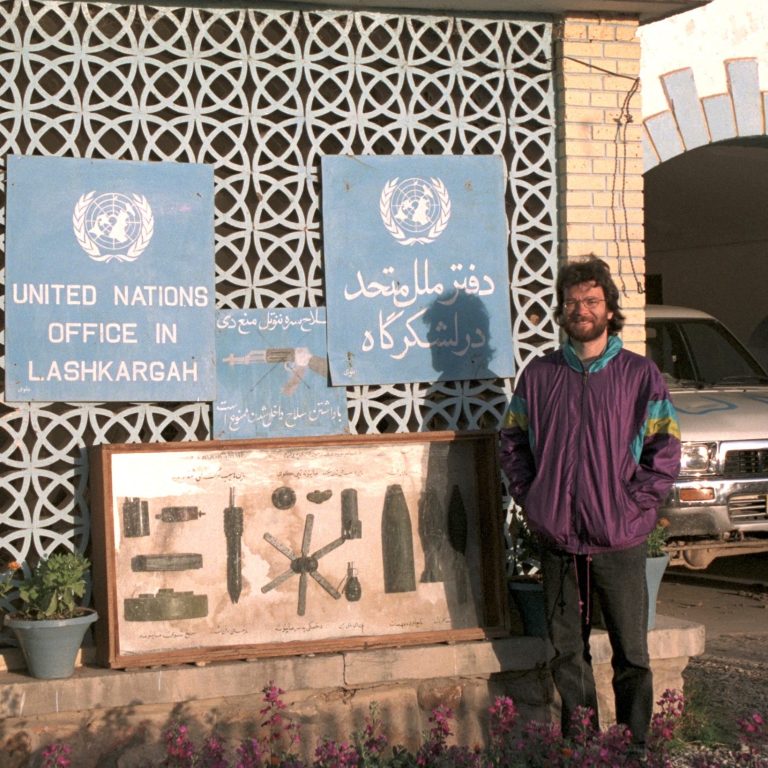
The local Taliban leaders then invited me for lunch in the ruins of an administrative building in Lashkargah, the provincial capital. Most of them were former Mujaheddin and had one or more limps missing; everyone was sitting on the ground.
They were happy that I had a beard that was sufficiently long (so as not to be Shiite), that my first name was Alexander (because Alexander the Great got married in Afghanistan some 2320 years ago and plays a prominent role in the mythology of the Pashtun people) and that I was German (“Like us, Germans are Aryans”). They also thought that Germany should support the Taliban because Afghanistan had finished off the Soviet Union leading to German reunification.
When food was served, things became somewhat complicated:
Me: “Many thanks for the bread, but I don’t eat meat”.
Taliban: “Why not? Is it for religious reasons? What is your religion?”
(UN security guidance had been clear: don’t discuss religion with the Taliban!)
After some heated back and forth between them, I finally replied: “I believe in the Universal Declaration of Human Rights” .
Not sure they understood but it settled the issue and permitted to finish the lunch in peace...
PS: I had difficult debates with the Taliban in Kandahar and Kabul about education for girls some years later.
Histories
August 1994: Landmines and the "clash of civilizations" (Kandahar/Afghanistan)
In mid-1994, Kandahar City – capital of the province of Kandahar – was basically divided into different sectors, each under the control of a Mujaheddin warlord (“famous commander”) with his militias. The surroundings of the city were controlled by yet other warlords. These militias were fighting against each other in ever changing constellations, with the civilian population in the cross-fire and the city in ruins.
In August 1994, as deputy head of the regional office for Southwest Asia of the United Nations International Drug Control Programme (UNDCP) in Islamabad, I travelled to Kandahar to discuss our alternative development activities with local authorities. There had been some tensions over our ongoing opium-cultivation survey. And there were questions over a new movement - the so-called Taliban - that had began to emerge in other parts of Kandahar Province two months earlier.
Together with other UN staff, I spent the night at the UNICEF compound. Given that it was located just opposite the camp of one of the militias, we all slept in cots in the yard of the compound to prevent being buried in the rubble of a building in case it would be hit by rockets fired between militias.
In the cots next to me, some United Nations volunteers from Somalia and Libya discussed an article by Samuel P. Huntington on the “clash of civilizations” that had been published a few months earlier. Huntington posited that the clash of superpowers is replaced by the clash of civilizations: the West will lose its influence; Asiatic cultures will gain in economic, military and political power; there will be destabilisation through Islam; and Americans need to maintain their western identity and protect their culture against non-western societies. (In 1996, Huntington turned his article into a best-selling book). In this setting of Kandahar and Afghanistan with Muslims fighting Muslims, Huntington’s theses seemed particularly absurd.
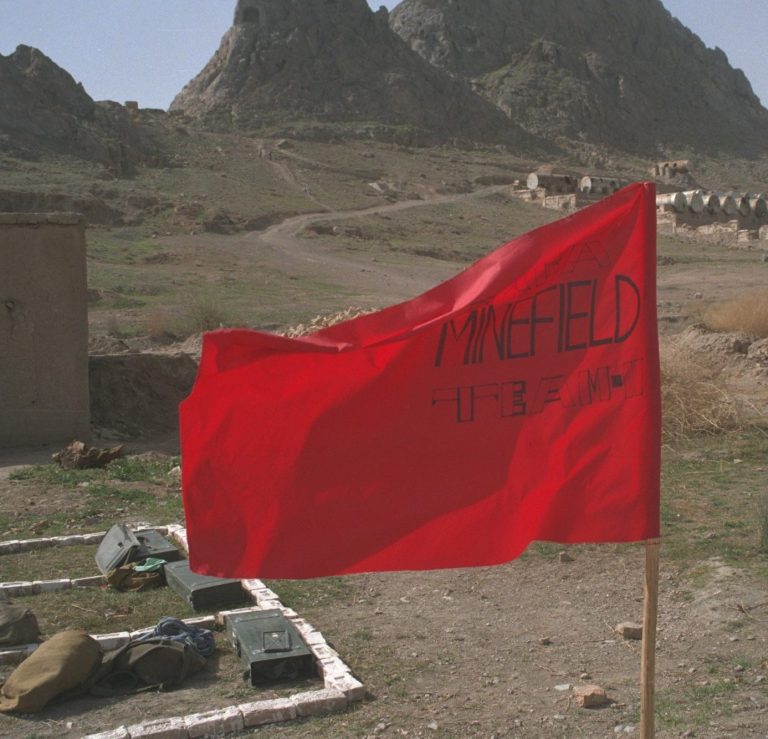
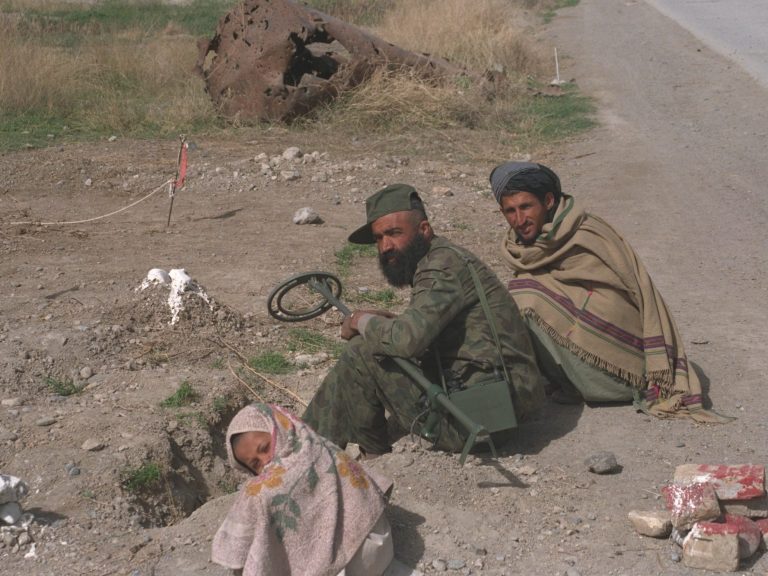
The next day, when walking along a footpath through an open field outside the city, I was surprised that children coming along stayed strictly on this footpath, did not step onto the gras and came very close to move around me. This is when I learned that the field was heavily mined.
Further outside the city, on the road leading towards Helmand province, a team of Afghan experts working for a UN-funded demining programme was busy removing landmines. I had full admiration for these courageous individuals literally risking their lives every minute of their work to make local communities safer.
A few months after my visit, in November 1994, the Taliban conquered Kandahar city and made it their headquarters. On 7 October 2001, less than one month after “9/11”, US-led forces began to attack Afghanistan. Among the first Afghan victims were four staff of the demining office in Kandahar. It was hit by a missile. Their deaths never made the headlines.
Histories
February 1994: A dinner in Tehran (Iran)
The ongoing execution of political prisoners in Iran and the (unrelated) skirmishes between Iran and Pakistan in January 2024 across their common borders made me recall an episode from 30 years earlier:
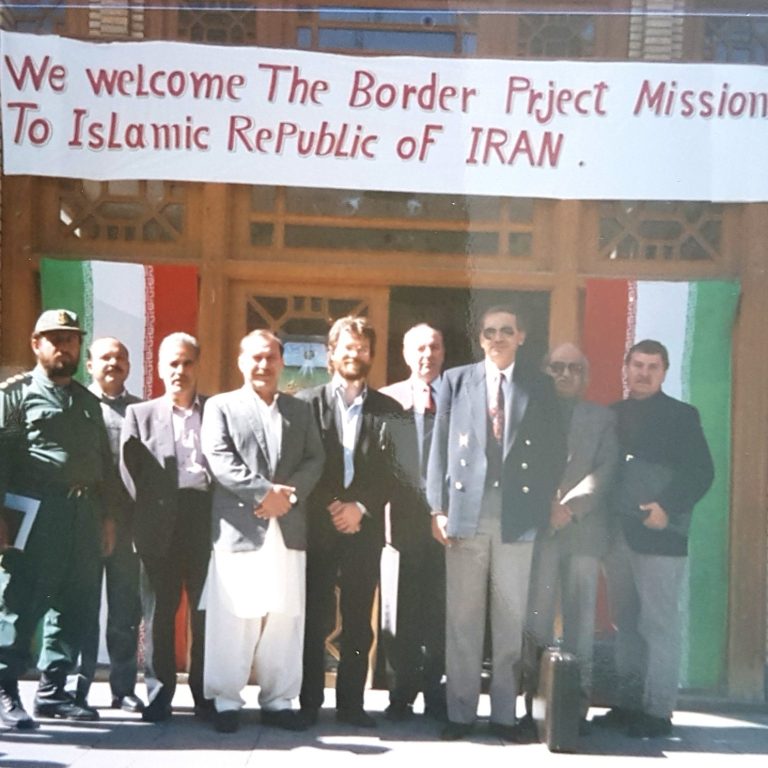
In February 1994, I was leading a United Nations mission to prepare a technical assistance project to counter drug trafficking in the border triangle of Afghanistan, Iran and Pakistan. Accompanied by Pakistani and Iranian generals and other officials, we started in Islamabad, proceeded to Balochistan, then across the Iranian border to Sistan-Baluchistan, and – after some adventures – finally to Tehran.
In Tehran, I had to host a dinner for Iranian counterparts. The chief guest sitting opposite me was a man with a black turban. He was introduced as a hojat-ol-eslam who was or had been the prosecutor general of Tehran. After some small talk he asked me out of the blue: “Do I look like a butcher?” I was puzzled: “Why do you ask?” Him: “Everyone calls me the butcher”. He then continued talking about his diet and pre-breakfast morning exercises.
It was only later on that I learned that his nickname was “the butcher of Tehran” because he is considered to be one of the main persons responsible for the execution of thousands of political prisoners in Iran between July and December 1988.
While there has never been justice for the victims of nor accountability for the 1988 massacre, that person is now the president of Iran, Ebrahim Raisi. And again, political prisoners are being executed in large numbers. Plus ça change …
Postscripts:
- 2024: On 19 May 2024, Ebrahim Raisi died in a helicopter crash.
- 2025: Political executions continue in Iran, including via public hangings.
- 2025: There is still no justice for the victims of the 1988 mass executions.